Please Read Before Placing The Order - We are wholesalers & we are offering Raw Materials for much less cost than Amazon. We cannot offer free shipping or any discount on shipping cost. Once your order is packed our team will reach out to you with exact shipping cost which needs to be paid seperatly based on the exact shipping cost as per final weight & dimension of package. Dispatch Timeline - 3 to 4 days minimum. Unboxing video is must to resolve missed item issue. Happy Candle 🕯️ Making.
Please Read Before Placing The Order - We are wholesalers & we are offering Raw Materials for much less cost than Amazon. We cannot offer free shipping or any discount on shipping cost. Once your order is packed our team will reach out to you with exact shipping cost which needs to be paid seperatly based on the exact shipping cost as per final weight & dimension of package. Dispatch Timeline - 3 to 4 days minimum. Unboxing video is must to resolve missed item issue. Happy Candle 🕯️ Making.
Polycarbonate vs Silicone Molds for Pillar Candles
Pillar candles need a mold that can hold a straight, clean shape while also releasing cleanly once the wax has set. Two materials dominate this category in the candle making, polycarbonate mold and silicone mold. Each one brings real strengths to the table, and each comes with genuine trade-offs.
Choosing the wrong mold type for your pillar candle line can cost you both time and money, especially if you are producing at wholesale volume. This guide compares both options in detail, covering finish quality, durability, cost, and ease of use, so you can make an informed choice for your business.
What Are Polycarbonate Molds?
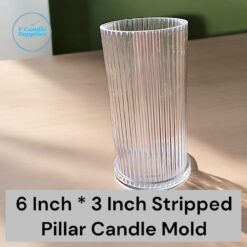
Polycarbonate molds are rigid, clear plastic molds commonly used in professional candle production. Because the material holds its shape firmly under pressure, it gives finished candles crisp, sharp edges and clean geometric lines that are difficult to achieve with a flexible material.
Most professional pillar candles you see with a glossy, almost mirror-like finish are made using polycarbonate molds. This glossy shine comes directly from the smooth internal surface of the rigid plastic, which the cooling wax picks up as it sets against the mold wall.
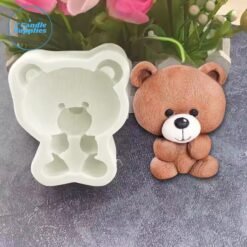
Silicone molds are flexible rubber molds that can stretch slightly to release a finished candle. This flexibility is what allows silicone to handle shapes with curves, texture, or fine detail that would be nearly impossible to remove cleanly from a rigid mold without breaking either the candle or the mold itself.
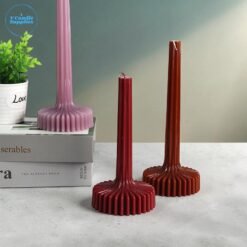
Because of this stretch, silicone opens up design possibilities that polycarbonate simply cannot match. Sculptural shapes, embossed patterns, and highly detailed novelty designs are almost always made using silicone rather than rigid plastic.
Polycarbonate produces a glossy, professional shine that many customers associate with premium candles. Silicone tends to give a matte or slightly textured finish, with the exact result depending heavily on the internal surface of the specific mold you are using.
Shape Complexity
Silicone handles complex shapes, undercuts, and fine surface detail far better than rigid polycarbonate ever can. Polycarbonate, by contrast, performs best with straight-sided or gently tapered pillar shapes, since anything too intricate risks becoming stuck during release.
Durability
Polycarbonate molds generally last longer overall and resist surface scratching well if you handle and clean them carefully over time. Silicone molds tend to wear out somewhat faster under heavy, repeated use, though they typically cost less per unit to replace when that happens.
Release Process
Polycarbonate requires the candle to cool fully and contract slightly before it will release cleanly from the rigid mold walls. Silicone molds, on the other hand, release almost immediately once the wax has set, since you can simply flex the mold away from the finished candle.
Price Point
Silicone molds are usually the cheaper option upfront, especially when you buy them in multi cavity formats designed for bulk production. Polycarbonate molds cost considerably more to purchase initially, but they tend to last through many more production cycles, which can even out the cost difference over time.
Best For
Polycarbonate suits smooth, tall, straight-walled pillar candles intended for premium retail display. Silicone works better for novelty shapes, embossed designs, and smaller decorative pillar candles where visual detail matters more than a glass-like shine.
Which One Should You Choose?
Choose polycarbonate if
You sell classic pillar candles that need a glossy, high-end finish for retail shelves or gifting collections. Your candle designs are mostly simple cylindrical or geometric shapes without heavy surface detail. You produce large batches regularly and want molds built to last for years of consistent use.
Choose silicone if
You want detailed, sculptural, or textured pillar candle designs that stand out visually from standard offerings. You are still testing new shapes and do not want to commit to the higher upfront cost of bulk polycarbonate molds. Your current budget is tighter, and you need several different mold shapes to build out your early product range.
Many established candle businesses actually stock both mold types side by side rather than choosing only one. Polycarbonate typically covers their core, high-volume pillar line that customers expect to see consistently. Silicone then covers seasonal releases or limited edition shapes that rotate throughout the year.
Tips for Using Polycarbonate Molds
Always seal the wick hole at the base of the mold using mold seal putty or sticky tack before pouring your wax. Any small leak at this point will ruin the finish on your candle and waste a meaningful amount of wax in the process.
Pour your wax at the correct temperature range recommended for your specific wax type. Pouring at too high a temperature repeatedly over time can gradually warp cheaper polycarbonate molds, shortening their overall lifespan.
Let finished candles cool naturally at room temperature rather than rushing the process. Refrigerating pillar candles to speed up release can actually crack the polycarbonate mold due to the sudden temperature change, which is a costly mistake to make.
Tips for Using Silicone Molds for Pillars
Choose a silicone mold with slightly tapered walls when working on taller pillar shapes specifically. Perfectly straight-walled tall pillars tend to be noticeably harder to release cleanly from flexible silicone compared to shapes with a gentle taper built in.
Support the silicone mold with a rigid outer container or sleeve while pouring hot wax into it. This prevents the flexible mold from bulging or distorting under the weight of the wax before it has had time to set.
Common Mistakes to Avoid
Do not use dish soap to clean polycarbonate molds after use. Soap residue can leave subtle spots or film on the mold surface that later transfers onto your next candle’s finish. A soft, dry or barely damp cloth works much better for regular cleaning.
Do not force a candle that seems stuck out of a polycarbonate mold. Let it cool fully first, or place the mold briefly in the freezer to encourage contraction and a cleaner release, rather than risking damage to both the candle and the mold.
Do not overfill silicone molds designed for pillar shapes. The added weight of extra wax can distort the mold’s form if it is not properly supported during the pour, leading to an uneven or lopsided finished candle.
Shop Both Mold Types
V Candle Supplies stocks both polycarbonate molds and silicone molds for pillar candles, sold at wholesale rates for candle businesses across India. Compare shapes side by side and build a mold collection that genuinely matches your product line and production goals.
Frequently Asked Questions
Can polycarbonate molds be used for scented candles?
Yes, fragrance oil does not damage polycarbonate as long as you stay within the recommended fragrance load percentage for your specific wax type and blend.
Do silicone pillar molds need mold release spray?
Usually not, since silicone naturally releases wax without much assistance. A light spray coating can still help with very detailed or heavily textured designs where extra insurance against tearing is useful.
Which mold type is better for beginners?
Silicone molds tend to be more forgiving for beginners overall. They release more easily and tolerate small pouring mistakes better than rigid polycarbonate molds, which require more precision from the start.
How do I know if a polycarbonate mold has gone bad?
Watch for cloudiness, visible scratches inside the cavity, or a duller finish transferring onto your candles. Once a mold shows these signs consistently, it is usually time to replace it for better results.